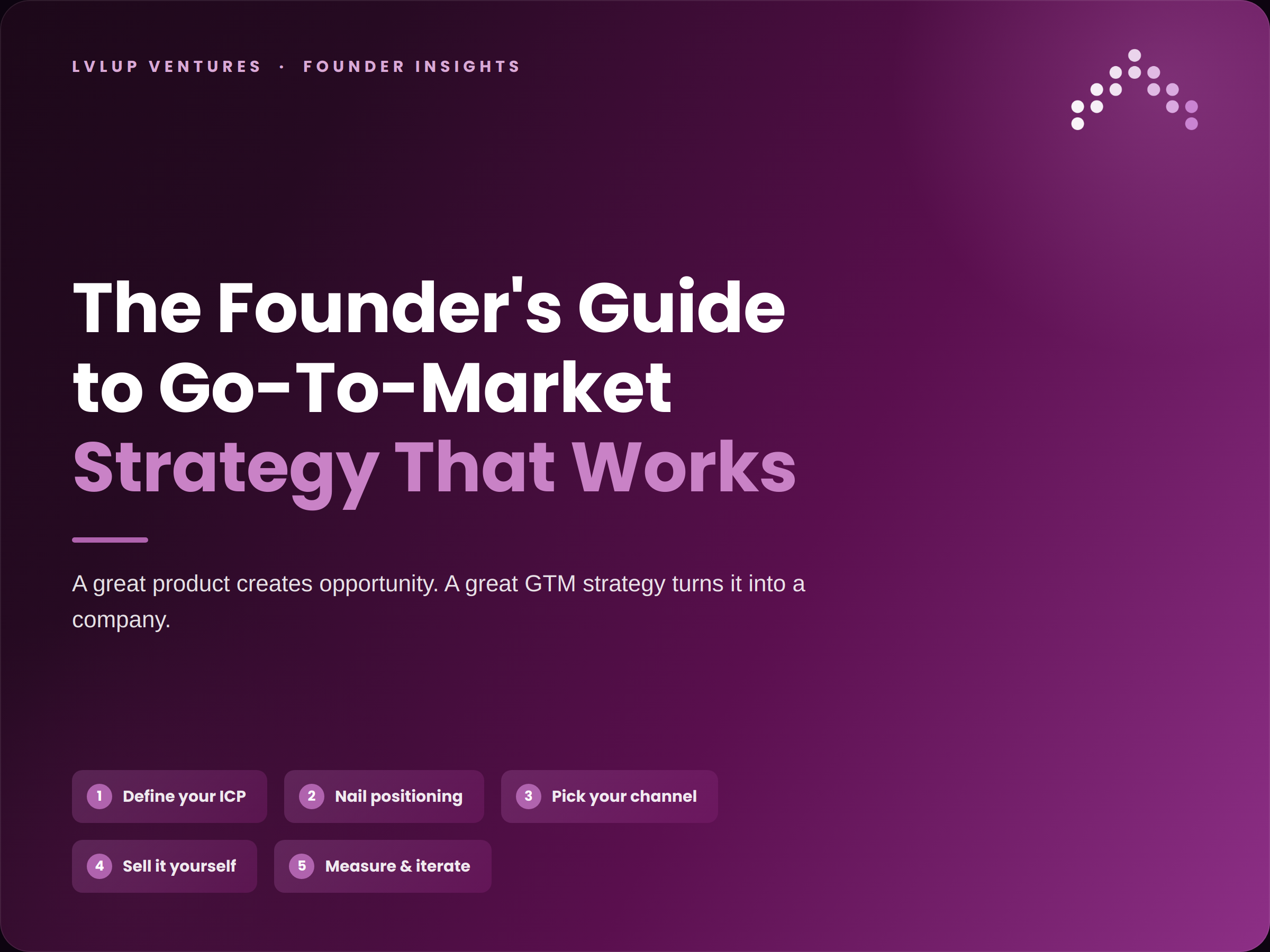
The Founder’s Guide to Building a Go-To-Market Strategy That Actually Works
Building a great product is only the beginning.
Every founder starts with the same challenge: creating something valuable. But turning that product into a successful company requires something just as important — a strategy for reaching the right customers, communicating the right message, and creating repeatable growth.
That is where go-to-market strategy comes in.
A strong GTM strategy answers one fundamental question:
How do we get our product into the hands of the people who need it most?
What Is Go-To-Market Strategy?
Go-to-market (GTM) strategy is the plan a company uses to bring a product to customers. It defines who your target customers are, how you reach them, how you position your product, and how you turn early traction into scalable growth.
Many founders think GTM begins after the product is built.
It doesn’t.
GTM starts the moment you decide:
- Who you are building for
- What problem you are solving
- Why your solution is different
The strongest companies build their product and their GTM strategy together.
Step 1: Define Your Ideal Customer
One of the most common mistakes early-stage founders make is trying to sell to everyone.
A product designed for everyone often resonates with no one.
Your first customers should be a specific group of people who have:
- A clear pain point
- A strong need for your solution
- The ability and willingness to take action
The goal is not maximum reach.
The goal is finding the customers who feel the problem most deeply.
A focused customer profile helps founders create better messaging, faster feedback loops, and stronger early adoption.
Step 2: Build a Clear Positioning Strategy
Before customers can buy your product, they need to understand it.
Strong positioning answers three questions:
Who is this for?
Your audience should immediately recognize themselves.
What problem does it solve?
Customers care about outcomes, not features.
Why should they choose you?
Your differentiation should be clear and memorable.
The best companies don't just explain what they do. They explain why it matters.
Step 3: Find Your Distribution Channel
A great product with no distribution will struggle.
Founders need to understand where their customers already spend time and how they make purchasing decisions.
Potential channels include:
- Direct sales
- Partnerships
- Community-led growth
- Content marketing
- Product-led growth
- Social media
- Marketplaces
The right channel depends on the customer.
A B2B enterprise company will likely require a different approach than a consumer app targeting millions of users.
Step 4: Create a Repeatable Sales Process
Early traction often comes from founder-led sales.
Founders should personally understand:
- What objections customers have
- What messaging resonates
- Why customers choose the product
- Why others decide not to
These conversations are not just sales opportunities — they are learning opportunities.
The goal is to turn what works once into a repeatable process.
Step 5: Measure What Matters
Successful GTM strategies are built through iteration.
Founders should track:
- Customer acquisition cost (CAC)
- Conversion rates
- Sales cycle length
- Customer retention
- Revenue growth
- Customer feedback
The best companies constantly refine their approach based on data.
The Biggest GTM Lesson: Learn Faster Than Everyone Else
There is no perfect GTM strategy on day one.
The companies that succeed are not always the ones that start with the best answers.
They are the ones that learn the fastest.
Talk to customers.
Test your messaging.
Experiment with channels.
Listen to feedback.
A great product creates opportunity.
A great go-to-market strategy turns that opportunity into a company.
At LvlUp Ventures, we work with founders building the next generation of companies and believe that execution — from product development to distribution — is what transforms ideas into lasting businesses.