Industry-Agnostic Seed Fund
Up to $250KDiscover our value-focused philosophy and unique venture ecosystem.
First Check Fund
Up to $10K first checks at idea stageThe LvlUp Ventures First Check Fund. 1,000 investments in 2026.
B2B SaaS Non-Dilutive Fund
$25K to $20M in financingDiscover LvlUp's unique venture debt / non-dilutive financing fund for B2B startups.
Agnostic/Tech Non-Dilutive Fund
$25K to $20M in financingSee how we're powering non-dilutive growth for pre-seed to growth-stage startups.
E-Commerce Ecosystem Builders Fund
Up to $100KLearn how we're backing the next generation of e-commerce ecosystem technology.
LvlUp Labs
Bespoke AcceleratorA boutique program for founders with hands-on-support.
CPG Fund
Up to $250KSee how we're scaling the future of CPG brands.
CPG Non-Dilutive Fund
$25K to $20M in financingEnabling non-dilutive growth for CPG startups.
LvlUp Labs CPG
Bespoke AcceleratorA high-touch accelerator for founders building scalable consumer brands.
LvlUp Flagship Fund
Up to $5M early stage · up to $100M late stageHigh-conviction capital. Strategic scale.
Small Business Fund
Up to $100KSupporting brick-and-mortar and service businesses with equity capital and financing.
Real Economy Non-Dilutive Fund
$25K to $20M in financingSupporting brick-and-mortar and services businesses with non-dilutive growth.



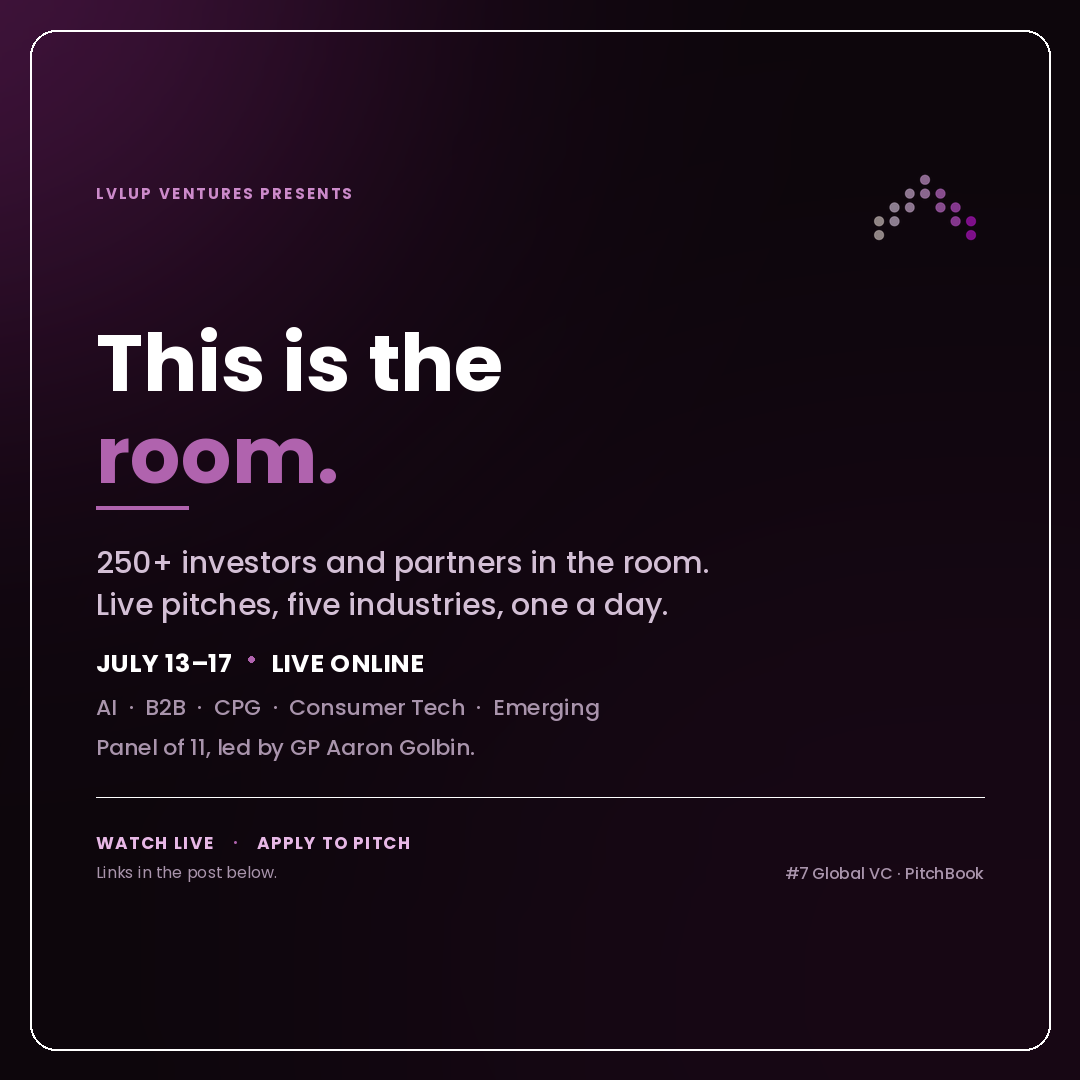
Upcoming Events
Stay in the know about our upcoming events.
VC-in-Residence Program
Learn more about our global network of VCs-in-Residence.
LvlUp Ventures Innovation Alliance
Learn more and join one of the largest alliances of enterprises, NGO's and leaders.
Middle East Investment Hub
Bringing LvlUp's capital, network, and operating infrastructure to the region.
Europe Investment Hub
Bringing LvlUp's capital, network, and operating infrastructure to Europe, from Paris.


Team
Meet our core, associate, and extended team powering the ecosystem.
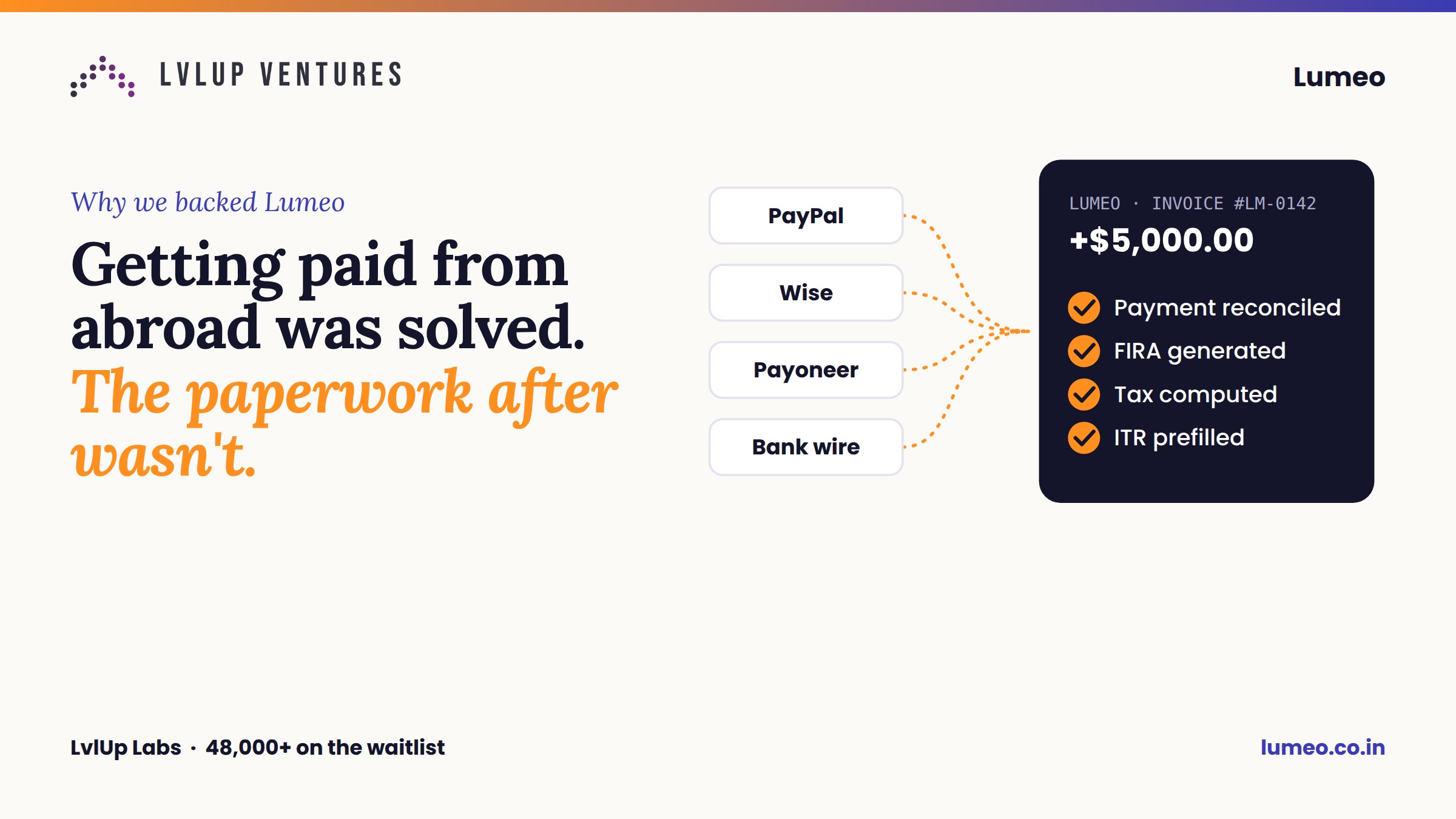
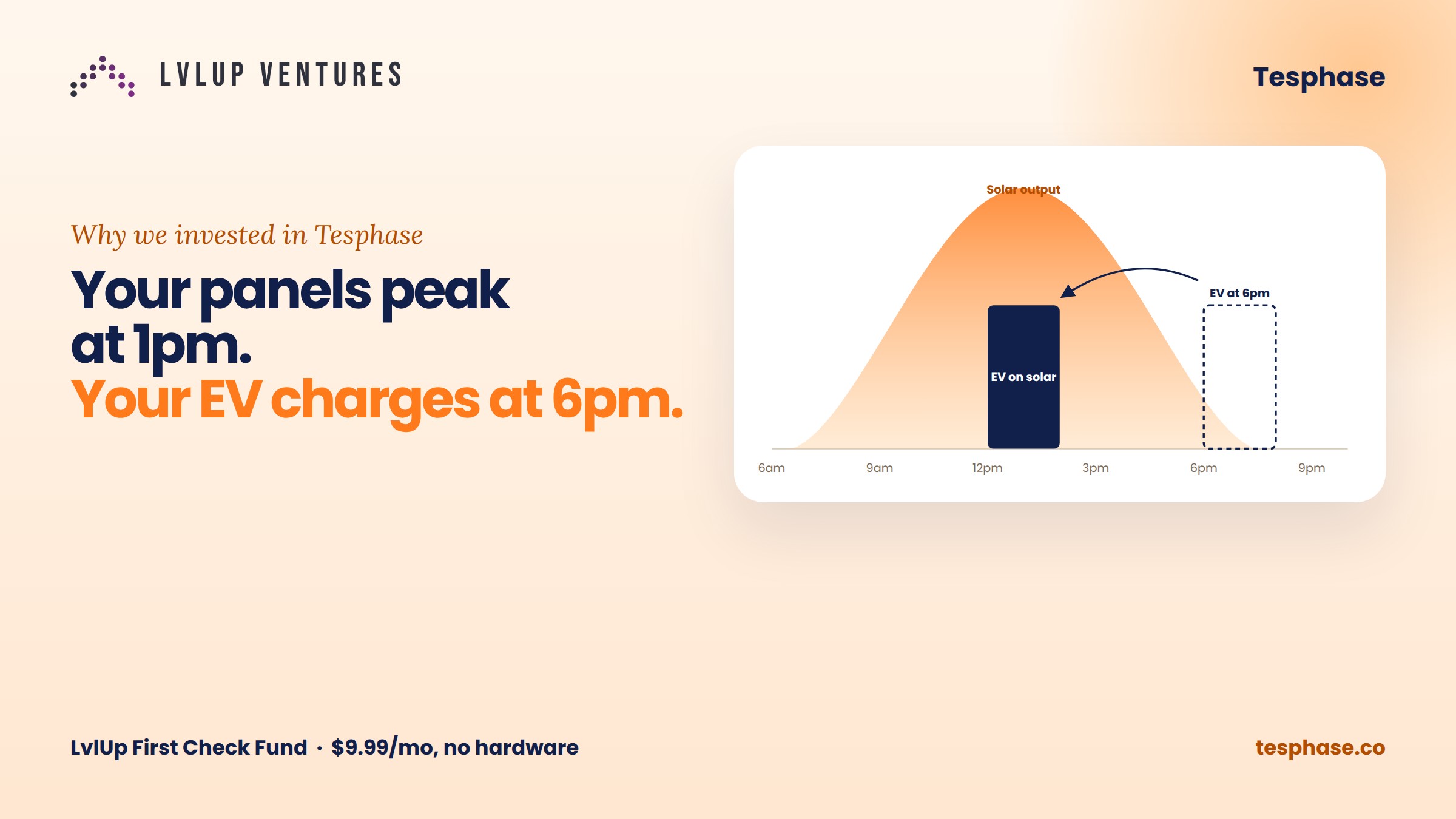
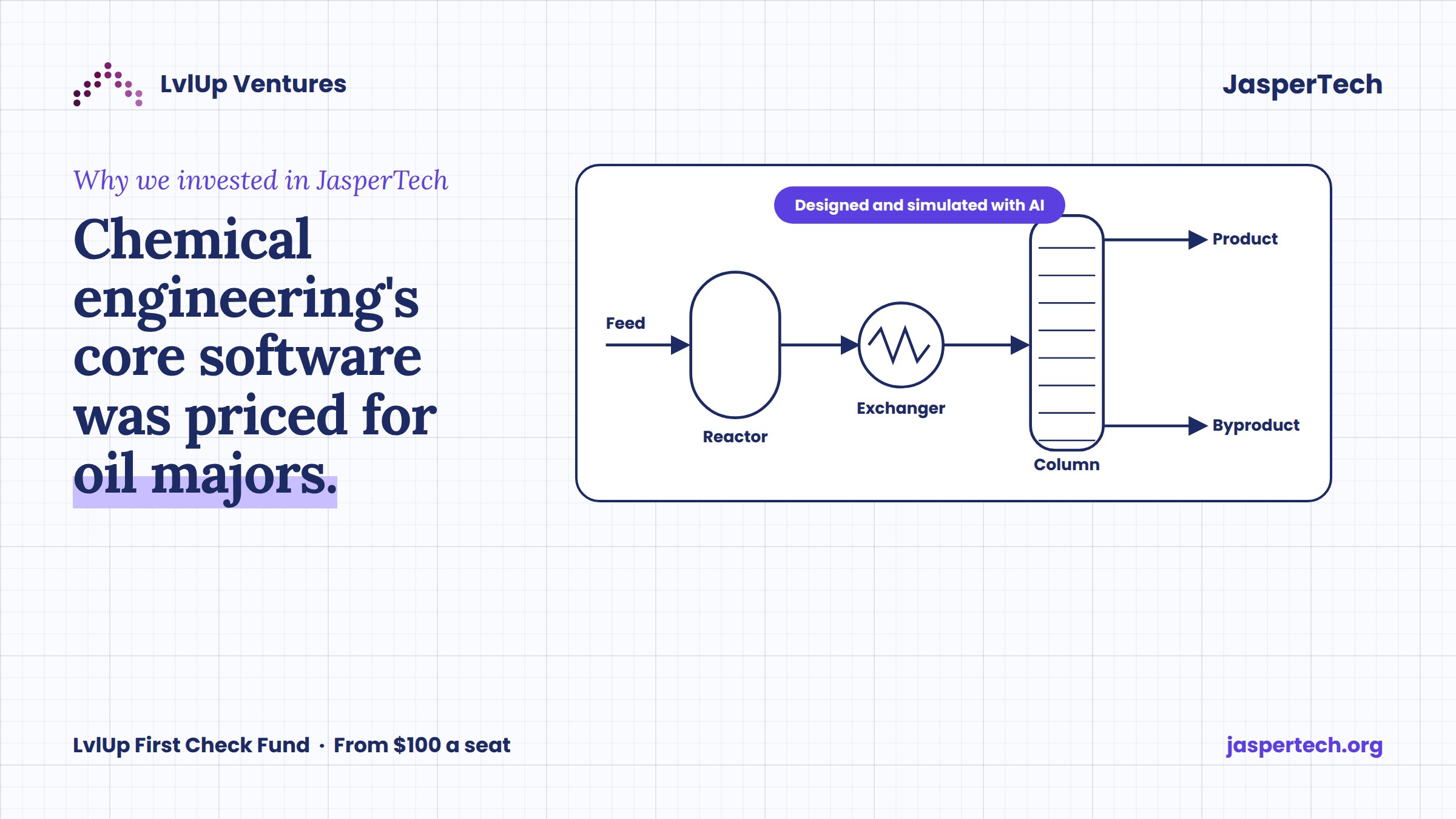
Portfolio
Get to know our family of founders and companies.
Blogs
Read articles from the LvlUp team, our VCs in residence, and guest contributors.
Testimonials
See how founders accelerated growth and gained investor access with LvlUp Ventures.
Invest with Us
Learn more about our process and unique offerings for LPs.