Why We Invested in JasperTech: AI-Native Process Simulation for the Next Generation of Chemical Engineering
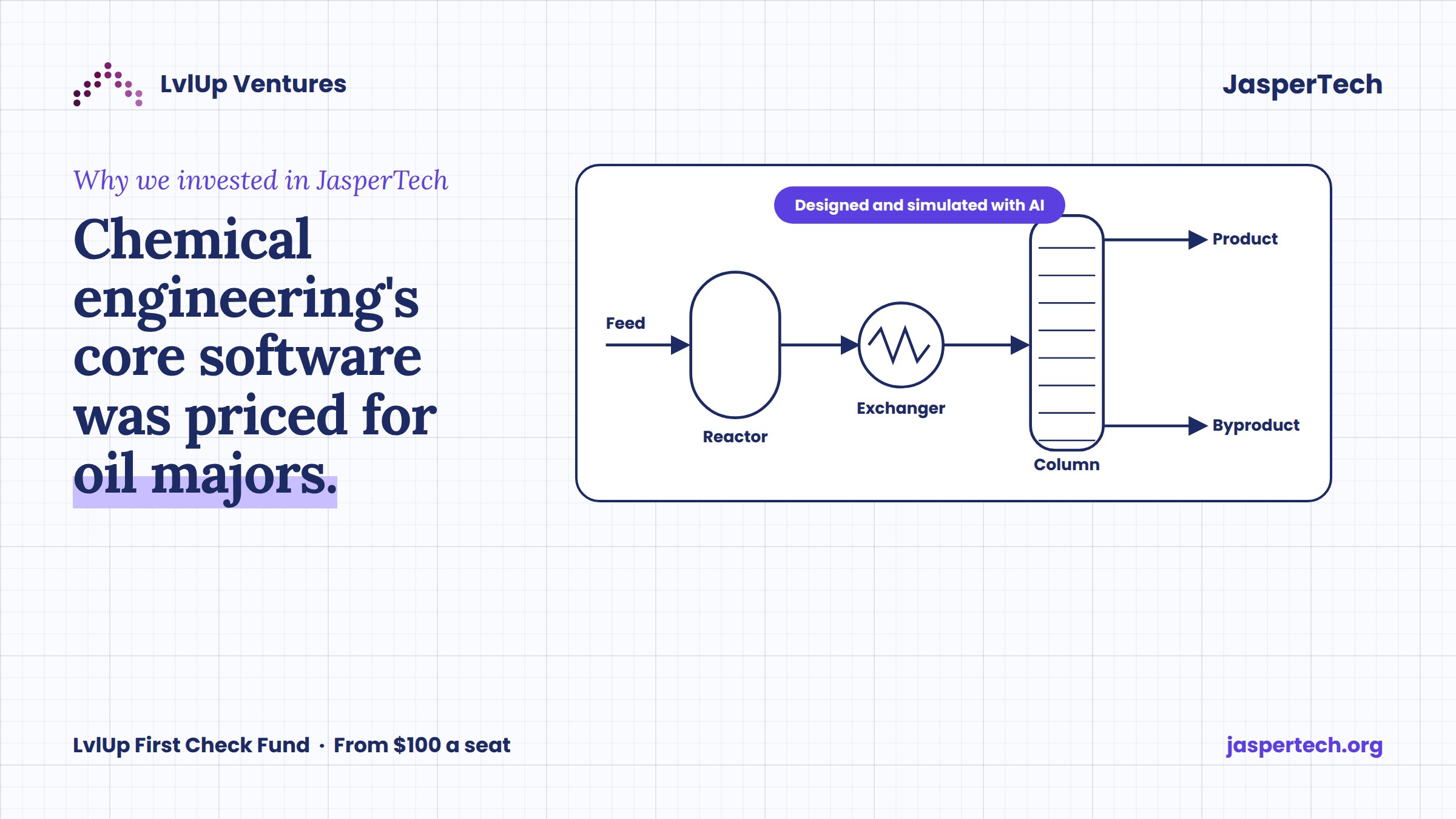
Before a chemical plant is built, it is designed in software. Engineers model how materials flow through reactors, heat exchangers and separation columns, how energy moves through the system, and whether the whole process will work at scale. Process simulation software is how that happens, and it sits at the center of how chemical, energy and materials companies make decisions worth hundreds of millions of dollars.
The market for that software is concentrated and mature. The best-known tools have been refined over decades and are deeply embedded in large engineering organizations. AspenTech, one of the category's leaders, was fully acquired by Emerson in 2025.
When we spent time with JasperTech, the question that interested us wasn't whether those tools are good. They are. It was who they were built for, and who is now doing the most interesting work.
We invested in JasperTech through the LvlUp First Check Fund.
Legacy Simulation Software Was Built for Incumbents
Established process simulation platforms grew up serving large oil, gas and chemical companies. Their pricing reflects that: enterprise licenses that make sense for a global refiner running many established processes.
For those customers, the tools fit well. They cover the chemistry and equipment those companies use, with long histories of validation and a workforce trained on them.
The distinction matters because the fit is less natural for a different kind of user.
Why the Next Wave of Chemical Engineering Looks Different
A growing share of new chemical process development is happening outside the incumbents. Climate and deep-tech startups are working on new ways to produce hydrogen, capture carbon, make materials and recycle chemicals. University research groups are developing processes that don't yet exist at commercial scale. Public and private funding has flowed into these areas in recent years.
These teams have two things in common. Their processes are often novel, so legacy tools weren't designed around them. And their budgets are tight, so six-figure enterprise licenses are hard to justify.
From our perspective, that is a classic setup for a challenger. A large, underserved group of users with real needs, priced out of the incumbent product.
What JasperTech Does
JasperTech is building AI-native design and simulation software for chemical engineering teams. It is aimed at the people legacy software prices out: climate and deep-tech startups, academic research groups and early-stage engineering teams working on processes the older tools weren't built for.
Pricing starts at $100 per seat per month.
Why Seat-Based Pricing Is the Growth Engine
JasperTech sells per-seat subscriptions that grow as teams grow.
We think this is the most interesting part of the model. A startup that begins with two engineers on JasperTech may have twenty in a few years if its process works. A research group's students become engineers at companies that need simulation tools. Winning users early, when their budgets are small, can lead to much larger accounts later.
The model becomes particularly interesting when you consider switching costs in this category. Engineers build process models over months or years. Once a team's models live in one tool, moving them is painful. That works against a newcomer trying to win incumbents' customers, and in favor of a newcomer that wins customers first.
Early Signal
JasperTech has a signed letter of intent from Rise Reforming, a Y Combinator S26 company, at $3,600 per year, with a paid pilot starting. The company was founded in 2026.
It is a small number, and it should be read that way. What matters is that a venture-backed climate company working on a new process chose to pay for JasperTech's tool at this stage.
What Has to Be True for This Model to Work
There is still plenty to prove.
Accuracy has to be earned. Engineers make expensive decisions based on simulation results. JasperTech will need to validate its models against established tools and real process data.
Novel processes are hard to model. The same thing that makes these users underserved, new chemistry, also makes accurate simulation harder.
Small customers take many to add up. A market of startups and research groups means many small accounts before large ones.
Incumbents may respond. Established providers could offer lighter or discounted versions for startups and academia.
What We Are Watching
We will be watching pilot outcomes and whether pilots convert to paying subscriptions. Validation results against established simulation tools. Seat growth inside each customer. Adoption in academic research groups. And how often early customers expand as they raise and hire.
If JasperTech becomes the default tool for new process development, it grows as that part of the industry grows.
Our View
We think the more important question in chemical engineering software isn't whether the incumbents are good. It's whether they are built for the teams doing the most novel work today.
JasperTech is building for those teams, at a price they can say yes to, with a model that grows as they do. It remains very early, but that is why we invested through the LvlUp First Check Fund.
Welcome to the LvlUp portfolio, JasperTech.