The Next Generation of Startups Is Rebuilding Broken Industries
Some of the most important startups being built today are not creating entirely new markets.
They’re rebuilding industries that already exist, industries that millions of people interact with every day, but that still operate on fragmented systems, outdated workflows, and inefficient infrastructure.
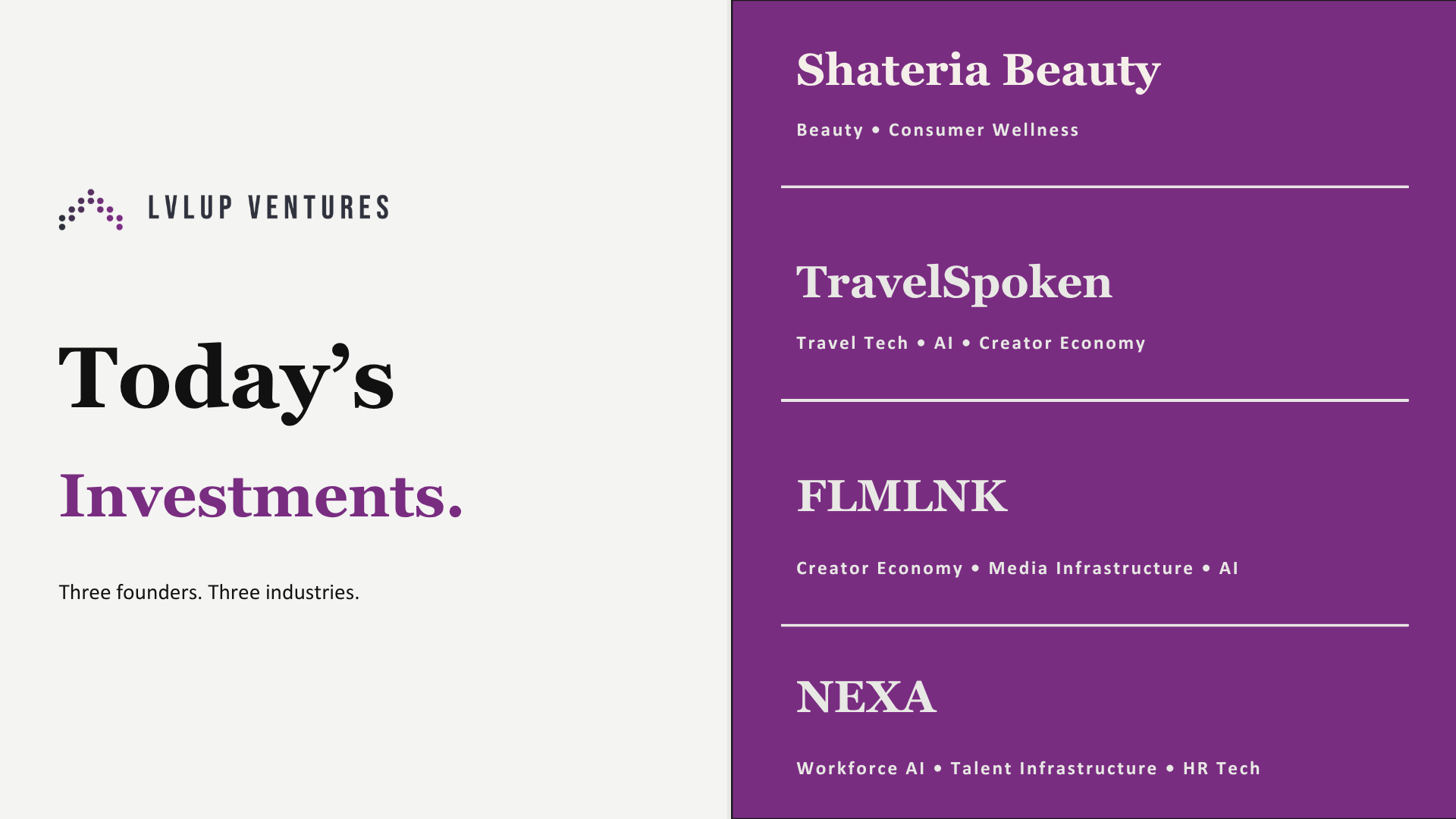
That’s exactly what stood out to us in the companies we backed this week across beauty, travel, creator infrastructure, and workforce technology.
At first glance, these sectors seem completely unrelated. But underneath the surface, the pattern was remarkably similar:
- large existing markets
- operational inefficiencies hiding in plain sight
- strong founder conviction
- and early proof that customers already want what’s being built
Shateria Beauty: Building Modern Infrastructure for Textured Haircare
The textured haircare market continues to expand globally, yet many products and systems still fail to address the specific needs of curls, locs, and scalp health in a cohesive way.
Shateria Beauty is approaching the category differently.
The company is building a plant-based haircare system designed specifically for textured hair communities, simplifying routines while focusing on long-term scalp health and wellness.
What stood out immediately was the operational quality of the business:
- profitable operations
- ~60% gross margins
- repeat retail purchase orders
- expansion across retail and direct-to-consumer channels
Rather than building another trend-driven beauty brand, Shateria is creating infrastructure around retention, routine, and underserved customer demand.
TravelSpoken: Turning Travel Discovery Into Bookable Infrastructure
Travel discovery has shifted dramatically over the last few years. Most inspiration now happens through creators, social content, and user-generated experiences rather than traditional travel platforms.
But booking infrastructure hasn’t evolved alongside that behavior.
TravelSpoken is building the missing layer between travel inspiration and transaction through AI-powered travel experiences and conversational booking workflows.
The company has already demonstrated impressive early traction:
- $38K revenue generated in just 9 weeks
- 1,500+ users acquired organically
- partnerships with companies including Amadeus and Duffel
- strong creator-driven distribution loops
What impressed us most was the speed of execution and the company’s understanding of where consumer travel behavior is heading.
FLMLNK: Rebuilding Film Distribution With Demand Intelligence
Independent filmmakers continue to face one of the hardest problems in media: distribution.
Marketing infrastructure for independent films remains fragmented, expensive, and largely inaccessible without major studio support. FLMLNK is building AI-powered infrastructure designed to solve that problem through demand intelligence, audience targeting, and automated campaign systems.
The traction already shows meaningful validation:
- $105K generated from roughly $6K in deployed campaigns
- pilot campaigns achieving up to 42x ROAS
- distributor affiliate agreements already signed
- pre-MVP revenue and active customer demand established early
What stood out most was the company’s ability to prove market demand before the platform was fully built - a signal we pay close attention to in early-stage investing.
NEXA: Building the Workforce Operating System
Workforce development remains one of the most fragmented operational systems in education and employment today.
Career services teams are overloaded, employers struggle to evaluate readiness, and organizations rely on disconnected tools that fail to scale. NEXA is building an AI-powered workforce operating system designed to unify career preparation, hiring workflows, employer sourcing, and placement outcomes into one platform.
The platform is already producing meaningful operational outcomes:
- 10,000+ AI screenings completed
- 15,000+ feedback reports generated
- 50+ successful hires completed
- integrations with Greenhouse, Lever, and Bamboo ATS systems
One case study showed job placement rates increasing from 17% to 43% within three months while saving organizations over $150K annually.
What stood out most was the broader vision:
building the infrastructure layer for how talent is prepared, verified, and deployed across workforce organizations, education systems, and employers.
A Shared Pattern
Although these companies operate in completely different industries, they share several characteristics we continue to prioritize at LvlUp Ventures:
- founders deeply familiar with the operational pain points
- early traction before significant capital
- infrastructure-focused products rather than isolated features
- large fragmented industries with strong demand already present
The next generation of major companies will not always emerge from entirely new markets.
Many will come from founders rebuilding the systems people already rely on every day — but doing it far better than before.
We’re proud to support Shateria Beauty, TravelSpoken, FLMLNK, and NEXA as they continue scaling toward their next milestones.