The Product Is the Entry Point: Why the Most Interesting Consumer Businesses Are Building Ecosystems, Not SKUs
The conventional consumer brand model has a specific shape. Develop a product. Find distribution. Build awareness. Drive purchase. Repeat the cycle with additional SKUs as the brand grows. The product is the business — and the business grows by selling more of it, to more people, in more places. It is a model that works and that has produced some extraordinary companies. It is also a model with a ceiling that most consumer brands eventually hit, because the product itself is the only engine of value creation.
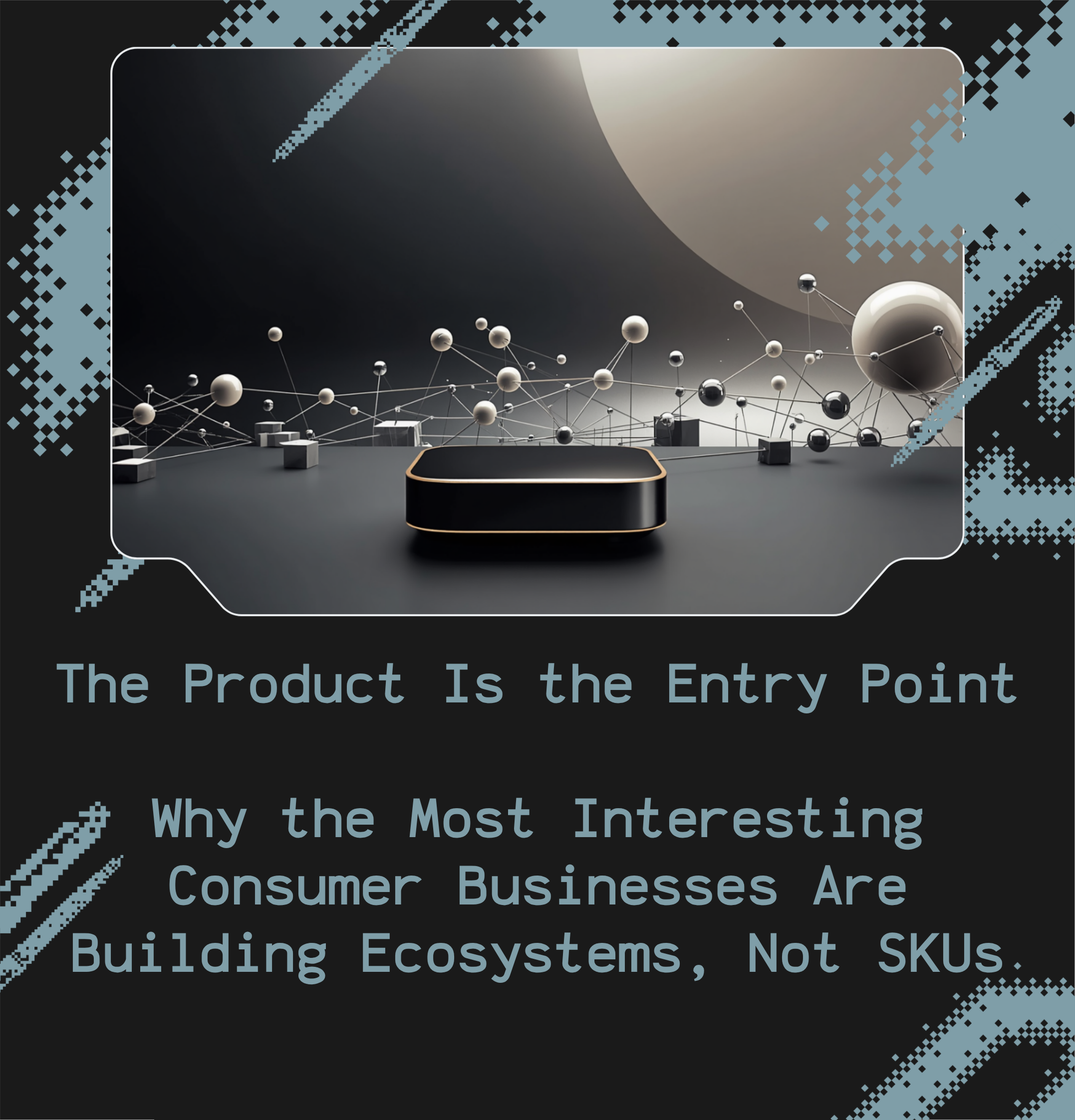
There is a different model emerging that treats the physical product not as the destination but as the beginning of a relationship — the entry point into an ecosystem of engagement, data, and recurring value that extends far beyond the initial purchase. The can of water is not the business. The platform the can unlocks is the business. The product earns the right to the relationship. The ecosystem is where the value compounds.
Ape Beverages is building this model precisely. Every can carries a unique QR code. Scan it and the experience begins — games, rewards, digital content, and a loyalty infrastructure that captures first-party data at scale and generates revenue streams that exist entirely independent of product sales. The beverage is real and the beverage is good. But the beverage is also a distribution mechanism for something larger: a consumer platform built around engagement, gaming, and the kind of loyalty infrastructure that traditional CPG companies have spent decades trying to build and consistently struggled to sustain.
Why the Traditional CPG Model Has a Data Problem
Consumer packaged goods companies have historically had a weak relationship with their own customers. The transaction happens at retail — in a store, on a platform — and the data about who bought the product, why they bought it, what they did with it, and whether they came back sits with the retailer rather than with the brand. The brand knows its sell-in numbers. It rarely knows its actual consumer in any meaningful depth.
This data gap is not just a marketing inconvenience. It is a structural limitation on the brand's ability to build the kind of relationship that produces loyalty, advocacy, and the organic growth that compounds without constant marketing reinvestment. Without consumer data, every acquisition cycle is essentially a new acquisition — the brand cannot differentiate between a first-time buyer and a loyal one, cannot optimize its communication based on individual behavior, and cannot build the personalized experience that modern consumers increasingly expect.
The QR code on every Ape Beverages can is a solution to this problem that is elegant precisely because it is invisible to the consumer as a data collection mechanism. It is visible as an invitation to something interesting — a game, a reward, an experience. The consumer opts in because the experience is worth opting in for. The brand receives first-party data at a scale and depth that the traditional CPG model cannot generate, because the engagement mechanism makes data sharing feel like a benefit rather than an extraction.
The Economics of the Ecosystem Model
The financial case for the ecosystem model is compelling because it creates revenue streams that do not require incremental product sales to generate. A consumer platform with genuine engagement — repeat users, active gameplay, loyalty redemption, digital content consumption — has monetization pathways that extend in multiple directions. Advertising and brand partnerships within the platform. Premium digital experiences available for purchase. B2B licensing of the engagement infrastructure to other brands. Each of these revenue streams is additive to the product revenue rather than dependent on it.
The result is a business with a fundamentally different economic profile than a traditional consumer brand. Revenue is not solely a function of units sold. Customer lifetime value is not capped by the frequency of product repurchase. And the business has a defensibility that product-only brands cannot replicate — because the switching cost for a consumer who has built a reward history, a game progression, and a relationship with the platform is meaningfully higher than the switching cost for a consumer who is simply choosing between two beverage options on a shelf.
What This Model Requires
Building an ecosystem around a consumer product is not a layer that can be added to an existing brand strategy without fundamentally rethinking the business. It requires product and digital development to be integrated from the beginning — the physical product and the digital experience need to be designed together, not sequenced. It requires a marketing orientation that treats engagement and retention as primary metrics alongside acquisition. And it requires the patience to build the platform value before the platform economics become visible in the financial results.
Ape Beverages has built this integration from the start. The can and the platform are a single product, not a product with a feature bolted onto it. The engagement mechanism is core to the brand identity, not ancillary to it. And the data architecture that the platform generates is an asset that appreciates with every scan, every session, and every returning user — compounding in ways that the traditional CPG model simply cannot replicate.
The consumer businesses that will define the next decade are not the ones selling the most product. They are the ones that used the product to build the deepest relationship. That is the model worth backing.
#Consumer Brands #CPG #Gaming #PortfolioSpotlight #BrandStrategy #Innovation #Opinion